
Introduction
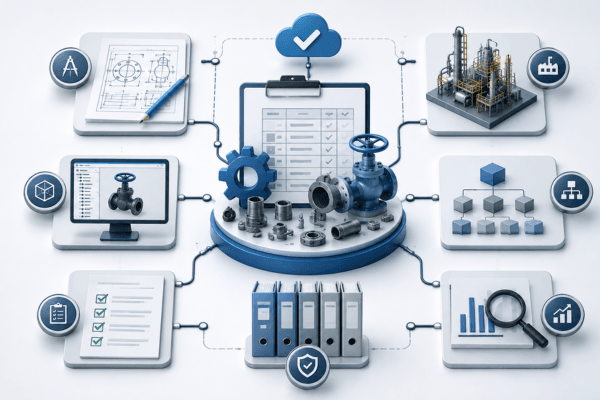
The Bill of Materials (BOM) plays an important role in engineering organizations. BOM serves a crucial role in the design, purchasing, production, construction, and maintenance of products. But companies still face problems with inconsistencies in BOM structures, repetition of similar materials, various naming methods, and human errors, resulting in high engineering costs, slow delivery of materials, and poor inventory management.
Standardizing the Engineering BOM ensures that all projects are performed in accordance with the standard BOM structure, approved components are used, and the right engineering data is shared throughout the product lifecycle.
This guide explains the importance of engineering BOM standardization, problems faced, and available solutions.
What is an Engineering BOM?
An Engineering bill of materials (EBOM) is an organized depiction of everything associated with engineering design, from components and assembly to both the equipment and required materials and documentation.
A typical Engineering BOM includes:
- Equipment
- Mechanical parts
- Piping and fittings
- Valves
- Instruments
- Electrical goods
- Structural materials
- Fasteners
- Purchased products
- Engineering documentation
Unlike a Manufacturing BOM (MBOM), an EBOM focuses on engineering intent rather than production sequencing.
Why Standardizing Engineering BOMs Matters
Without standardization, different engineers often describe the same component in different ways.
For example:

Although all three descriptions refer to the same component, many systems treat them as different materials. This can lead to duplicate material creation, incorrect procurement, fragmented inventory, and inconsistent reporting.
Standardization creates a single approved representation for every material and component.
Common Problems with Non-Standard BOMs
Organizations commonly face the following challenges:
- Duplicate materials records
- Inconsistent naming conventions
- Lacking technical characteristics
- Different units for measurements
- Countless supplier descriptions
- Wrong classification of materials
- Manual copy-and-paste errors
- Problems comparing BOM changes
- Poor searchability
- Procurement confusion
As companies grow and participate in more projects, some of these problems become more serious.
Key Principles of Engineering BOM Standardization
- Define a Standard BOM Structure
Every BOM should follow a consistent hierarchy.
Example:
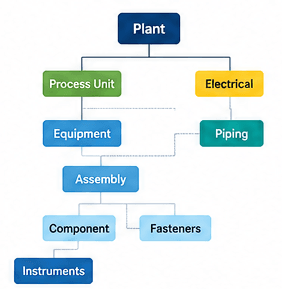
A consistent hierarchy makes navigation, reporting, and integration much easier.
- Standardize Material Descriptions
Create a structured description format instead of allowing free-text entries.
Example:
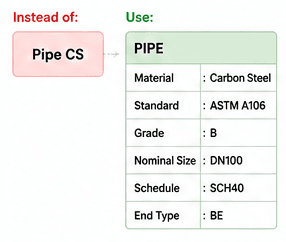
Structured descriptions improve searching and eliminate ambiguity.
- Create Material Classification Standards
Every material should belong to a predefined category.
Example:
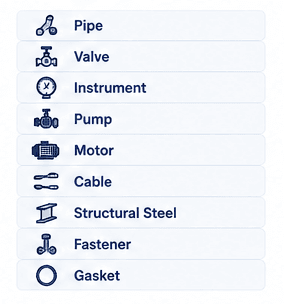
Each category should have mandatory attributes specific to that material type.
- Define Mandatory Engineering Attributes
Each material class should require essential attributes before approval.
Example for a Valve:
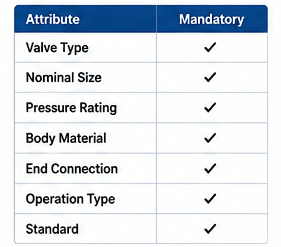
Mandatory attributes improve data quality and prevent incomplete records.
- Use Standard Units
Avoid mixing units such as:
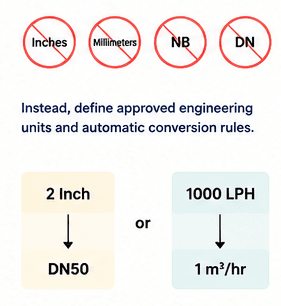
Consistent units reduce interpretation errors.
- Implement Material Coding Standards
Every organization should define a logical material coding system.
Example:
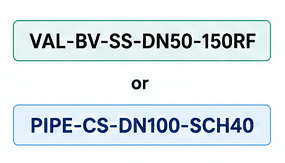
The coding system should uniquely identify every material while remaining scalable.
- Eliminate Duplicate Materials
Duplicate materials increase inventory costs and purchasing complexity.
Modern AI-based duplicate detection compares:
- Material descriptions
- Technical attributes
- Specifications
- Standards
- Dimensions
- Manufacturer information
- Historical usage
Rather than relying only on exact text matching, semantic comparison helps identify records that describe the same component using different wording.
- Create Approved Material Libraries
Instead of creating new materials for every project, maintain reusable libraries of approved components.
Examples include:
- Standard valves
- Pumps
- Instruments
- Motors
- Pipes
- Fittings
- Structural members
Engineers should select from these libraries whenever possible.
- Control BOM Revisions
Every Engineering BOM should maintain version history.
Typical revision workflow:
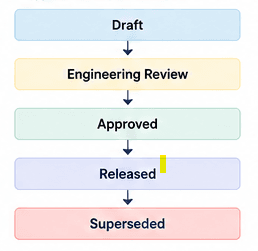
This ensures traceability and prevents outdated BOMs from being used.
- Integrate BOMs Across Engineering Systems
A standardized BOM should seamlessly connect with:
- CAD systems
- PDM systems
- PLM platforms
- ERP systems
- Procurement applications
- Inventory management
- Maintenance systems
This reduces manual data entry and improves consistency across the engineering lifecycle.
Best Practices for BOM Governance
Effective standardization is about governance and not just software. The organization must have:
- Approved naming conventions
- Attribute dictionaries
- Material ownership
- Review processes
- Approval processes
- Duplication prevention procedures
- Change management policies
- Audit trails
- Data quality checks
Engineering data should be viewed as an enterprise asset.
How AI is Transforming Engineering BOM Standardization
BOM standardization is dramatically improved by AI through the automation of repetitive and error-prone activities.
AI can:
- Create structured material descriptions
- Identify duplicate materials
- Indicate missing technical attributes
- Propose standard nomenclature
- Confirm engineering specifications
- Compare BOM changes
- Recognize aging elements
- Propose validated alternatives
- Extract BOM from engineering documents
- Aid engineers with intelligent search of materials
As a result, this reduces labor input while improving accuracy and data quality.
Benefits of Standardized Engineering BOMs
Companies that employ BOM standardization usually benefit through:
- Increased engineering productivity
- Reduced duplicate material production
- Accelerated procurement processes
- Better inventory accuracy
- Improved cost estimates
- Easy BOM updates
- Consistent documentation practices
- Easier integration with ERP
- Better project collaboration
- Higher quality of engineering data
As a result, the engineering processes become more efficient with fewer mistakes and lower overall project cost.
Conclusion
BOM engineering standardization is more than just putting data into the correct format; it is about creating one source of truth about engineering data. By putting regulations into place that include standardized formats, material standards, controlled repositories, and AI to provide validation and duplicate detection, companies will be able to improve their engineering productivity, cut down on purchasing risks, and make it easier to collaborate among engineering, production, and operations.
With the increasing size of engineering projects and the complexity of their execution, standard BOMs can serve as one of the key prerequisites of digital transformation, since they make the data exchange between CAD, PLM, ERP, purchasing, and maintenance systems more efficient and effective. Companies investing in BOM standardization today will be in a better position to automate their engineering activities, improve decision-making, and prepare for future data-driven operations.
About IEHUB.AI
IEHUB.AI uses artificial intelligence to assist engineering companies in streamlining, governing, and automating Engineering Bill of Materials (EBOM) management. With the help of the IEHUB.AI platform, companies get intelligent duplicate elimination processes, organized material descriptions, engineering data regulation, product configuration, BOM automation, and hassle-free data integration with CAD, PLM, and ERP systems. By laying the basis for uniform engineering data, IEHUB.AI allows companies to increase their efficiency, minimize engineering duplication, and ensure digital transformation.

Karthik S is our in-house Master Data Quality Manager certified by ISO-8000 for Data Quality and Enterprise Master Data. He comes with 10+ years of experience with prior experience in handling customer, asset & engineering data, improving data quality & accessibility, eliminating data loss and standardizing data to match industry standards.
